Overview#
FED3Bandit is an implementation of a 2-armed bandit task that uses a FED3 device. FED3Bandit uses FED3, which means it is highly customizible, it can be used in rodents home-cage, and requires minimal supervision (food and battery level checks every few days).
In this page we first provide a brief introduction of a 2-armed bandit task and we then describe the features that FED3Bandit has and the ways in which it can be customized.
Two-armed bandit task#
A two-armed bandit task is a special case of the k-armed bandit problem. It consists of an environment where there are two choices that are each associated to a probability of receiving a reward. Let these two choices be “Left” and “Right”. The reward probabilities of Left and Right may be fixed or come from a probability distribution, remain constant or chenage upon a condition, and may be dependent or independent from each other.
When the reward probabilities of Left and Right change upon meeting a condition, the task is called nonstationary. A special case of nonstationary bandit task is The restless two-armed bandit task, where reward probabilities change sligthly after each choice.
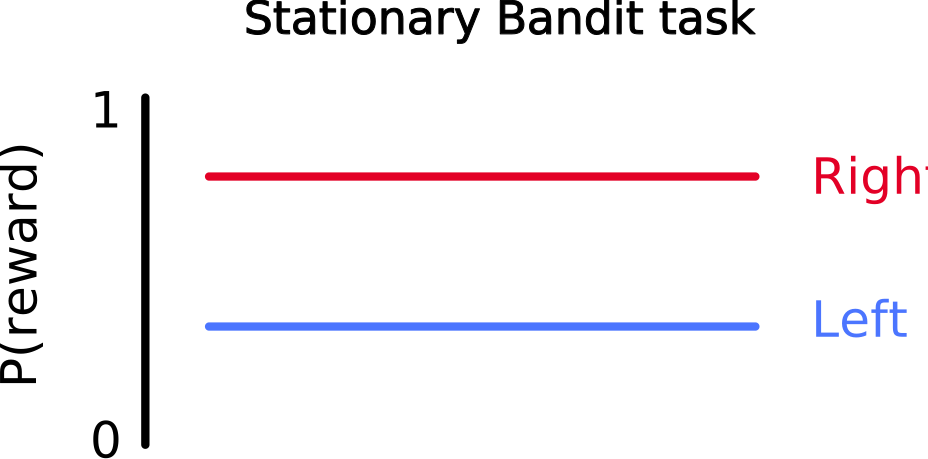
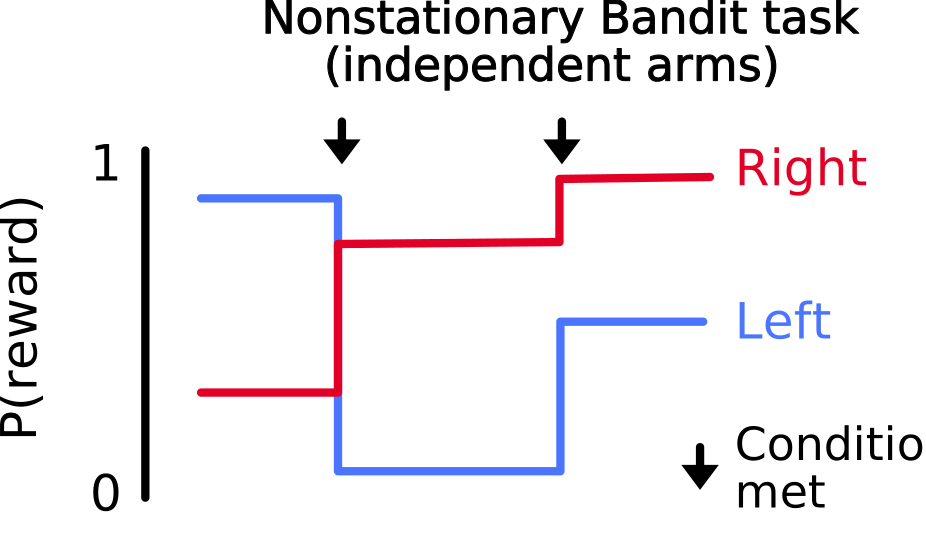
Here are some examples of conditions that may be used to trigger the change in reward probabilities:
After n rewards deliverd
After m consecutive choices in the higher probability port
After every choice (restless bandit task)
The two-armed bandit task has become increasingly popular in neuroscience as it can probe learning behavior, particularly learning by trial-and-error. The task is also suitable for the the use of reinforcement learning techniques and models.
FED3Bandit#
FED3Bandit is an implementation of the two-armed bandit task that that uses the FED3 device (more information about FED3 can be found here: About FED3)In this section we will describe the FED3 features as they pertain to FED3Bandit.
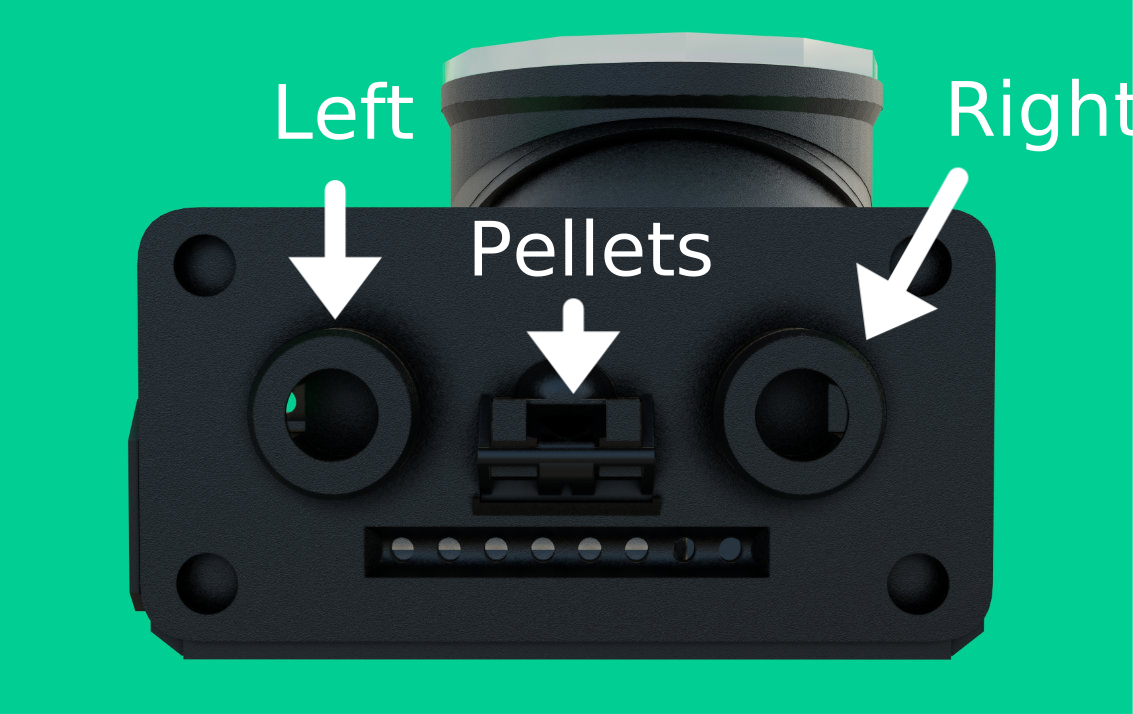
FED3 has two nose pokes, which are used in FED3Bandit as the two “arms”. Additionally, FED3 has a well through which food pellets are dispensed. FED3Bandit, thus, uses nose pokes as choices, and food pellets as rewards.
To set up the bandit task, FED3 uses the Arduino programming language. There is an Arduino FED3_Library that automates all the code needed to communicate with the FED3 hardware and wraps into easy-to-use functions. Additionally, the FED3 library has examples, including bandit task examples, that are ready to be used. Alternatively, you can find Bandit Task Arduino Recipes and a Tutorial on this site.
FED3Bandit collects and logs data in the form of a CSV file into the microSD card. The Output Data section describes the specifics of the CSV file.
For data analysis, we have developed two tools. One tool is a web-based application (fed3_app) for visualization and data analysis. fed3_app can read CSV files output from FED3Bandit and provides visualization and analysis tools. You can find more information about how install and run fed3_app in the fed3bandit web-app section of this site. For data analysis fed3_app uses the fed3live python package.
fed3live is a python package data that contains functions for analysis of FED3Bandit CSV files. You can find more information about the fed3live python package in the Analysis and visualization section.